

Is there any such thing as settled science? I am going to argue that there is.
What do I mean by “settled” science? A scientific claim that any rational person would accept as true and established beyond any reasonable doubt. We do not expect such theories to be replaced by an alternate theory.
You might object that this is not very scientific! We must always keep in mind that we might be wrong. We need to be ready to adjust what we know to accommodate new information that might cast what we know today into doubt. Keep in mind that we are fallible and that we might come to invalid conclusions.
All knowledge, including science, is contextual. We study reality and, based on what we observe, we form logical conclusions. But we can only account for that we know about.
For instance, take Newtonian gravity. In the context of not knowing what happens near the speed of light, it was entirely reasonable to accept Newton’s laws of gravity as settled science. We did not know what happened at extremely high velocities, so we had no reason to doubt Newtonian gravity. Newtonian gravity is valid, within the context of things not moving close to the speed of light.
We then expanded our context to account for things near light speed. We realized that in that context, Einstein’s relativity provides better mathematics for what happens with gravity at near light speed. Does that mean that we had no reason to be certain about Newtonian gravity?
No, it does not. We knew it was an accurate description of gravity at speeds much lower than the speed of light.
That is why NASA uses Newtonian gravity for most purposes, even though relativistic equations would be more accurate. Newtonian gravity is easier to deal with and is extremely accurate at the speeds NASA works with.

Certainty is contextual. Suppose, in the context of our knowledge, the available evidence supports a theory. We should be certain about that theory. But what we are wrong? After all, we used to believe some strange things.
We used to think things burned because of phlogiston. Phlogiston was a mysterious substance that was thought to exist in all combustible bodies.
We used to think that dinosaurs were all sluggish, scaly critters that probably lived in swamps to support their massive weight.
Yes, sometimes we are wrong. Sometimes the facts do not support our theories. There are some theories that we have no business accepting as anything more than a plausible hypothesis.
These are the theories that do not make up the body of settled science. These are the theories we should not consider settled.
It would be dishonest to consider a theory settled in the absence of evidence. It would also be dishonest to consider a theory settled if we did not understand it well enough to be sure it was consistent with all the available evidence.
Some theories are entirely reasonable within the context of the available evidence. Sometimes all the known evidence points to these theories being true.
Sometimes we understand the theory well enough to conclude it is entirely consistent with the facts. If the facts are consistent with that theory and only that theory, then we can be certain that the theory in question is true.
We should not entertain serious doubts about theories that have substantial evidence behind them.
We can always imagine that we might disprove some theories. However, we should be certain about a theory if all the available evidence points to it being true.
Certainty does not require us to account for, by magic, for the possibility of a context of knowledge we do not currently possess. We can be certain that something is true even if there is something we do not know about now that may later show that it is not true.
Certainty is contextual, it is valid to be certain based on the context of available evidence. Provided that we are willing to address any evidence that arises, should the context of our knowledge change. We can be certain something is true. And yet adjust our theories when the context of our knowledge expands.
However, there are theories that we can consider completely and forever settled. These are theories we know with certainty and can prove with no shadow of a doubt to be true.
We know these facts are true and that we cannot show them to be false.
It would contradict known facts of reality if they were not true. Things would have to not be what we know they are.
Examples of these would be that atoms exist. We know atoms exist; we have seen them. If they did not exist, almost everything we know about chemistry and atomic physics would not be true.
We know evolution happens. We might not know everything about how it happens, but we know it does. If I wanted disprove evolution, we would have to invalidate almost everything we know about biology and the known facts of biology would have to be other than what they are.
We know the Earth is round and that it orbits the Sun. To invalidate this, the direct evidence of our senses would have to be wrong! That we can see that the Earth is round would have to be fake. And how would we explain the observed behavior of Earth if it does not orbit the Sun?
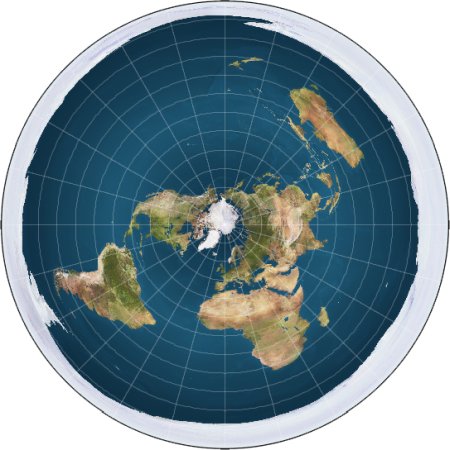
We can say without a shadow of a doubt that theories like this are absolutely and forever settled and that we will never find anything that contradicts them. No such evidence is even possible.
We completely settled such science. It would be nonsensical to pretend otherwise!
So yes, there is such a thing as settled science. It is foolish to pretend otherwise. And it would be intellectually dishonest and non-scientific to pretend that we have not settled this!
It is unscientific to question that the Earth might not be round. Or that evolution does not happen. Or that atoms do not exist. Why? Because we have seen that the Earth is round! Are we to question the evidence of our senses so that we can become a Flattard?
It would contradict the obvious implications of the evidence of our senses to believe atoms do not exist. Additionally, we have seen atoms! It would go against observable facts and their logical implications to question that evolution happens.
It would be unscientific to question that light behaves like a wave. This would go against the evidence of our senses and the logical implications of that evidence.
To question theories we can show are irrefutable facts based on the evidence of our senses and the logical implications of such, is unscientific.
Your belief that the irrefutable facts of reality might be wrong is completely nonsensical and unscientific.
The ability to entertain alternatives to the way reality works is not indicative of science. It is closer to the mindset of the religious person that must evade reality to maintain the possibility of his delusions. The questioning of everything, even things we can prove beyond any reasonable doubt, is little better than those that deny science outright.
To deny the absolute certainty of that which we can show beyond any reasonable doubt, is to either partially deny the veracity of the evidence or fail to understand that science is about the study of an objective reality, not blind guesswork.
