

In this article, I am going to show that religious faith is unreasonable, and that no honest person should ever exercise faith. We can make very similar arguments about other kinds of faith. However, we will focus on religious faith.
What is Faith?
I define faith as:
The blind acceptance of assertions in the absence of any evidence or proof, based on the emotional desire for that assertion to be true.
Dwayne Davies
The only claims of any merit are those that help us achieve some good value or another. That value might be to understand how to deal with the world around you and stay alive. It might be how to get lots of money and buy that house you want. It could be any value that you might imagine.
However, for a value and claim to be of worth, it must help us achieve some purpose based on reality. If not, of what use could it possibly be to anyone?
To achieve good values, we must deal with the world as it really is. We must understand how the world works and deal with reality as it is. Only the things that help us do this help us to achieve values. Therefore, in order to help us achieve values in the real world, a claim must have a valid relation to the world. It must have some relation to observable facts. If not, then it is impossible for it to have any merit. That which has no relation to the real world is useless in achieving values.
If we are going to make or evaluate claims about reality, the only ones that are of any use in achieving values are those that correspond with reality. Truth is correspondence with reality. Truth is that which corresponds to the way things are. Therefore, the only claim that has any merit is that which has some truth to it.
But how do we know whether a claim is true? You must first establish the possibility of the claim. If we make a claim, we should establish that there is some evidence or proof behind it. If you make an assertion without evidence, we cannot show it to correspond to reality. That assertion is, therefore, entirely without merit.
How do we establish whether something is possible? We discuss that in this article on possibility. Indeed, we took much of this section from that article.
To summarize that article, before we take any claim seriously, we must first establish that there is some evidence that it might be true. Otherwise, it is a waste of time considering it.
If we make a claim, we should establish that there is some evidence or proof behind it. Why should anyone accept any claim in the absence of evidence? Why would anyone do this when it could have no objective value?
Because they want it to be true. They have no cognitive reason to want it to be true. That person simply feels that it is preferable for it to be true. They feel an emotional response to the assertions being made, which makes them want to believe that the assertion must be true.
There is no reason to accept something merely because you want it to be true. Emotions are not tools of cognition. A claim is not valid because you wish it to be so.
But that is what faith is, the acceptance of things for which there is no evidence or proof. Faith is, therefore, the acceptance of baseless assertions for no reason and because someone wants it to be true based on emotion. However, emotions are not a valid reason for believing something.
What is the Harm?
Faith and reality are always in conflict. So is virtually every claim accepted for no reason and defended against reason. Knowing the truth is not a trivial task. It requires careful observation of reality, serious thought and a dedication to understanding the facts for what they are.
Faith is the refusal to do any of that. Faith is the attempt to bypass thought and proceed directly to the truth by wishing empty assertions to be fact. As though wanting something to be true somehow makes it so.
Assertions accepted on faith are almost always wrong. There is no real chance that anything you believe for no reason corresponds to the facts. There is essentially no chance that your blind assertions are true.
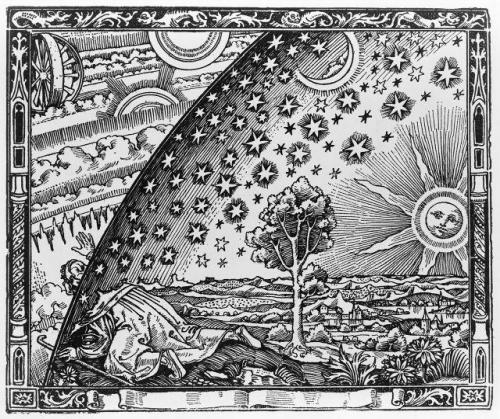
Which is why the Bible is almost invariably wrong about everything. It is wrong about the shape of the Earth, and when it asserts that pi is exactly three. It is wrong when it pretends that Earth has a glass dome above it that lets the rain in. There are lots of other silly examples like this.
Therefore, almost everything every religion says about the universe is wrong. That is why their cosmologies are always wrong. That is why, when religions say what is right or wrong, they are frequently wrong.
Many religions prohibit things like theft or murder, in certain circumstances. The Bible includes commandments not to steal or murder. Most of us would agree that these are objectively wrong. These are examples of the few instances of things in the Bible that reasonable people might agree with.
However, the Bible does not forbid murder because of any valid reasoning. It does not forbid killing people because of any real respect for individual rights. It does this because it asserts God would not like this for reasons that are not entirely clear. It is the same with stealing, which is not forbidden because of any arguments to do with property rights, but again for reasons that God does not make clear.
So even when it forbids things that reasonable people might consider wrong, it does not do so for valid reasons. Religions forbid things for invalid reasons and manage to once again prove that they are wrong.
Once you have rejected reality and embraced faith, what does that leave you to believe? Whatever you want to believe in, as long as we assume it blindly.
Most often, this takes the form of whatever is emotionally satisfying or seems superficially easy to grasp. Or which provides moral guidance with little to no actual connection to how man should act to be happy and thrive.
But just because something is easy to understand does not mean that it is true. Something like the theory of a flat Earth might seem intuitive. However, the Earth is not flat.
It seemed intuitive to the Greeks that there were no irrational numbers. However, they were wrong and irrational numbers turn up all the time in mathematics.
