

It might seem obvious that nothing could exist without a Creator. But it does not matter how intuitive this might seem, it is incorrect. It does not matter if you think that a claim seems intuitive, simple or obvious. That does not make it correct. Many of the most important numbers used in mathematics, such as pi [footnote]the ratio between the circumference of a circle to its diameter.[/footnote] are irrational numbers.
Claims that seem intuitive are frequently wrong. Reality rarely conforms to our simple intuitions. What many people think is obvious and logical is proof that they are ignorant and do not know how to think.
The religions of every almost culture believe in a spiritual existence after death where the spirit endures after the body dies. Why? Not because there is any reason to believe this. No, but because this is emotionally satisfying. Many people cannot deal with the fact that their consciousness will cease existing after their body dies.
Many people cannot imagine what happens after they die. They cannot imagine how their consciousness could just go away. So it is comforting to imagine it does not happen.
There are also those that cannot grasp that there can be any objective morality in the natural world. These people believe that the only way that any morality could exist is if some intelligent being imposed his will upon the world. They do not grasp that morality is not a matter of what some cosmic being imposes upon the world. They cannot grasp the concept of objective morality.
Despite what they believe, objective morality exists. There are principles of right and wrong that are true regardless of what any mind asserts. What is right or wrong depends on the nature of reality and what is good or bad according to a standard. That standard is life. What is right or wrong are objective facts and can be determined by using life as a standard.
The religious rarely recognize the existence of objective morality. If there is no objective morality, then where could morality come from? The only alternative is for morality to be a matter of arbitrary say-so. The only alternative is for someone to tell them what is right or wrong.
Many people look for powerful, allegedly wise supernatural beings to tell them what is moral. Gods fit that need nicely. They need a system of morality to guide their actions. Since they think there is no objective morality, then gods must provide that moral code for them.
If God is going to provide a moral code, it is only logical that God gets to enforce his moral code. How is he to do this? There must be some way of enforcing God’s moral judgement, surely?
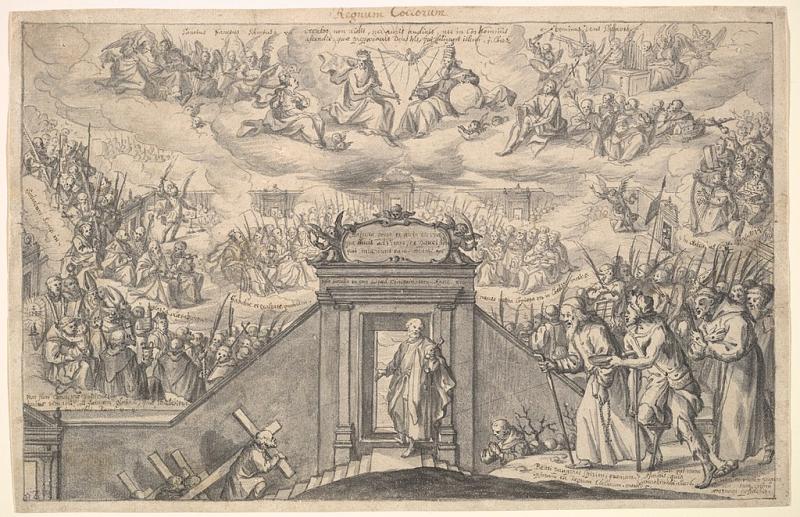
That is a major function of the afterlife in many religions. Once you die, the gods will judge you according to the morality of the religion and reward or punish you accordingly. If you are a devout follower of the religion, the gods will reward you in the world after this one.
This is a kind of coercive control. It says to people that they have to toe the line of the religion and believe what they say. God will punish them if they disobey, not only in this life but after this life. However, if they listen to the religious teachings, they will receive spiritual rewards beyond anything in this life.
This creates a powerful emotional incentive to believe whatever the religion tells them. To ignore any niggling doubts that they might have. To not listen to anyone that might try to argue with them and to just believe. They only get all of that nice afterlife stuff if obey the moral teachings of the religion and do the bidding of the clergy.
Every religion tries to offer its followers moral teachings. We all need moral guidance to help choose which actions to take in life. Once you have rejected reality, you must get that moral guidance from somewhere. Religions are more than happy to offer that.
This guidance typically comes with plenty of threats and other forms of emotional manipulation. It usually includes threats of fate worse than death intended to scare the worshipers into obedience.
When you have no argument for why someone should do what you say, then you will need to appeal to emotions. You will need to make arbitrary claims intended to scare them into obedience. Arbitrary claims that promise happiness for obedience.
If you have no real arguments, then appeal to emotions is all you have to get your followers to obey your moral teachings. It is, therefore, hardly surprising that the most devoutly religious people are also the most heavily emotionally invested in their religion.
They are told that if they have faith then the gods will reward them with impossible miracles. However, if they disobey, they will suffer terrifying torments.

The devoutly religious are heavily invested in this nonsense. They believe that religion is the only means of moral guidance they have. They refuse to consider that there can be any other alternatives.
It should come as little surprise that many of these people desperately cling to the teachings of their religion. Then it should also come as little surprise that since reality conflicts with religion, the devout will defend their religion against reality.
Their faith will invariably clash with science and reality. Faith says one thing, but science will always say another. Therefore, if they perceive science as a threat to their faith, it is the practice of science that they must discard.
When reality invariably clashes with their religion, they have two fundamental choices: to reject their faith as dishonest or to reject reality. In embracing faith, they have already rejected reality, so they almost invariably continue to reject reality.
Many religious people know what the facts are but will not abandon their faith. Reality gets rejected for clashing with their delusions.
The devoutly religious cannot allow reality to destroy their faith. If faith and reality itself clash, then it is the offending reality that must lose out.
Faith requires that it is defended against the intrusion of reason. It is the acceptance of assertions with no attempt to discover facts. It is an attempt to defend oneself against inconvenient truths.
