
Asserting that something is true in the absence of evidence is taking it on faith that it is true. That is what faith is, choosing to believe something for no reason. Asserting that evolution happens but having no evidence for it would be just as much an exercise in faith as asserting that God exists.
That evolution is true does not mean that you have established the truth or that it is possible until you have evidence for it.
Just because a claim is true does not mean you have established that it is true or possible in the absence of evidence.
Here, you would have no reason to think it is true. The theory of evolution has always described reality, but until I discover evidence for it, nobody had any reason to consider it to be possibly true.
You have not established something as possible until you provide evidence that it is so. Even if your claim is true, until you do this, you have not established that it is possible and it is baseless speculation.
Of course, when Darwin presented his theory of evolution by natural selection in the Origin of Species, he presented a lot of evidence, thus establishing that his theory was not only possible, but by far the most likely explanation for the observed phenomena.
For something to be possible, you must have a reason, based on evidence, to think that it is so. It also has to not contradict known facts, as we shall see in a moment.
According to this definition of “possible”, it is not true that “anything is possible”. Unless you can establish a reason to believe something is true, it is has not been established as possible. Nothing is possible until there is the slightest bit of evidence that shows that it is.
You cannot say that it is “possible” that you can walk to the Sun. There is no reason to think that this is possible. As we shall soon see, we have good reason to think that this is impossible.
What Counts as Evidence?
What would qualify as evidence? Either some perceptual fact or conceptual argument would qualify.
A perceptual fact would be some directly observable fact, something you can observe directly via sight or one of the other senses.
Suppose that you want evidence that there is such a thing as an emu. Going out and seeing an emu would be pretty good perceptual evidence that emus are real! Or suppose that you want evidence that Jupiter has more than one moon. Well, you can observe that yourself.
Conceptual evidence are facts that support a claim which are not directly observable by the senses.
Suppose that I was to say that Musk cannot fit his full crew of 100 onto the Starship. What evidence could I provide for this?
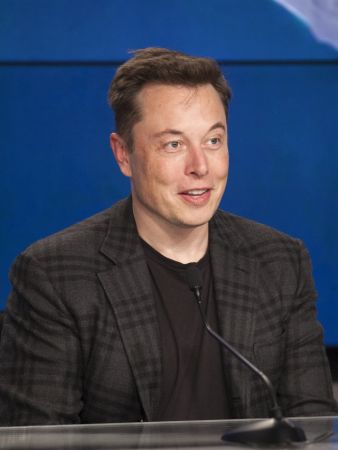
I could wait to see if he builds it and then wait to see if he tries to put a crew of 100 on it and watch this fail. We can directly observe this, and this might be another example of perceptual evidence.
We do not have to wait for Musk to fail to get a crew of 100 onto his Starship. Instead, we can provide conceptual evidence that this is not workable. How can we do this? Let me show how this might be done.
The Starship has a payload capacity of 220,000 pounds. However, we can show that the amount of food and water required for a crew of 100 would be roughly 260,000 pounds.
Therefore, the weight of food and water for a crew of 100 would exceed the payload capacity of Starship. This is interesting conceptual evidence that the Starship cannot feasibly support a crew of 100 as proposed at the time of writing.
Take essentially any mathematical theorem. Let us take a simple one, like the Pythagoras Theorem. Here is the equation:
c2 = a2 + b2This theorem relates all three sides of a right-angled triangle. It says that the sums of the squares of the two shorter sides equal the square of the third, longest side.
Can you provide perceptual evidence for this? You could observe a lot of right-angled triangles and you should find that this holds. How would you know that this holds for all right-angled triangles?
You would use mathematical facts that we know to be true and use those facts to prove that the Pythagoras Theorem applies to all triangles and not just the ones we have measured. We can show this conceptually, using mathematical concepts.
The Impossible
Lots of things are not established as possible and cannot be so. No evidence has ever been given to support the truth of such claims.
Note that all gods fall into this category. Noone has ever provided valid evidence for any god. Since supernatural entities allegedly supersede nature, they will never provide such evidence.
We shall also see that not only has the possibility of any god not been established, their impossibility can be definitively proven.
If you can establish that if X was true, it would contradict a known fact, then X cannot be possible.
There cannot be any contradictions in reality. Nothing that is true contradicts something else that is true. If you know Y is true, but X contradicts Y, then X is impossible. Thus, its possibility obviously cannot be established.
Let’s say that I wish to establish that man is a dinosaur. As you know, dinosaurs lay eggs and do not bear live young. They also do not feed their young milk using mammary glands. However, humans bear live young and feed their young using mammary glands, just like other mammals!
Humans also have hair, and no dinosaur has hair! In addition, humans also replace their teeth only one time while dinosaurs have no such limitation. Humans also have diaphragms, something only mammals possess and certainly not dinosaurs. Humans have three bones in the middle ear, which is a diagnostic feature of a mammal and a feature no dinosaur could possess.
