
And it goes on like this. We can identify several features of humans that no dinosaur could share. These facts show that man is a mammal and, therefore, cannot be a dinosaur.
So, if a man was a dinosaur, this would contradict the known fact that man is mammal. Not only is there no evidence that man is a dinosaur, no such evidence could exist. The possibility of man being a dinosaur has therefore not been established.
We can go beyond saying that it has not been established as possible for man to be a dinosaur, we can say that it is impossible for man to be a dinosaur!
A claim is impossible when:
A claim has not been established as possible, and the evidence contradicts it.
That which contradicts any known fact of reality is impossible.
If you make a claim that would require something to contradict its nature or which otherwise contradicts known facts of reality, then you are making an absurd claim of impossibility.
Gods always seem to be defined as immortal entities with supernatural and magical abilities. As supernatural abilities are a synonym for magic, a being with magical abilities. It is easy to see that no being could be immortal or possess such reality-defying abilities. Therefore, any god qua magical being is by its supposed nature, is impossible.
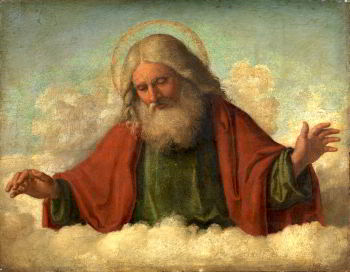
We can thus say it is impossible for any such Creator God to exist. Therefore, it is impossible for him to have created the universe.
Is there a difference between “not established as possible” and “impossible”? Yes, there is, and it is an important distinction.
When you say, “not established as possible”, you are pointing out that no possibility has been established. You are saying that nobody has given you a reason to take that claim seriously.
However, when you say that something is impossible, this is not the same thing. You are not saying that the claim lacks any evidence, and that there is no reason to take it seriously. You are saying that the impossible claim is definitively false because of its clash with some aspect of reality.
Suppose that I say that “evolution happens” but I have no evidence for it. That means that evolution has not been established as possible. Since I have not shown that it is possible. However, that does not mean that it is impossible and cannot happen. Only that I have not established the possibility that it happens.
Why is any of this important? Why can’t we just say that the possible are those things that occur to us and are possible if we have not shown that they are impossible?
Because there is no cognitive value in entertaining ideas which have no provable connection to the facts of reality. Such a thought or statement might as well not be said, as it has no cognitive value.
The arbitrary is worse than the false. If you make a false statement such as “I am a pink unicorn”, then it can be shown that you are not a pink unicorn. You are not a horse and you certainly do not have a magical horn. So, it is clearly impossible for you to be a pink unicorn.
Suppose that you assert that the first house on some random street in Sri Lanka has a psychedelic rainbow android. Assume that we have no way to verify this information. This is a completely arbitrary statement with no demonstrable connection to reality. In the absence of any evidence, there is no way to know whether this is possible or impossible or true or false. It might be true. Who knows? If we cannot check the house or otherwise find out if it has a psychedelic rainbow android. in it, we have no way to know.
How can we conclude anything about this claim? We can’t prove it true or false until we go there or communicate with this household, so until then there is no point thinking about it at all. At least if we knew it was false, we might do something with that fact. Sometimes knowing something is false is useful because at least you can rule one thing out.
This is one reason we should distinguish claims which have not shown to be possible from those shown to be impossible. The arbitrary is neither possible or impossible. We should distinguish arbitrary claims from impossible claims.
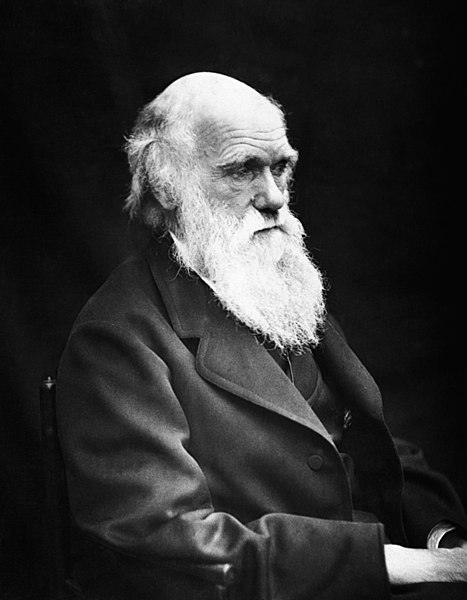
Just because the possibility of a claim has not been established, that does not make the claim impossible. Suppose that Charles Darwin had just asserted evolution happens. However, suppose that he presented no evidence. That does not mean evolution does not or cannot happen. It would just mean that we would have no reason to take Darwin’s claim seriously. A lack of evidence that something is true is not evidence that it is false.
Why Does this Matter?
The only claims of any merit are those that help us achieve some value in the world. That claim might be to understand how to deal with the world around you and stay alive. It might be how to get lots of money and buy that house you want.
Whatever the case is, for a claim to be of worth, it must help us achieve some purpose in the real world. If not, of what use could it possibly be to anyone?
To achieve values, we must deal with the world as it really is. We must understand how the world works and deal with reality as it is. That it is only that which helps us do this, that can help us achieve values.
Therefore, in order to help us achieve values in the real world, a claim must have a valid relation to the world. It must have some relation to observable facts. If not, then it is impossible for it to have any real merit. That which has no relation to the real world is useless in achieving values.
Therefore, if we are going to make or evaluate claims about reality, the only ones that are of any use in achieving values are those that correspond with reality.
Truth is the correspondence with reality. Truth is that which corresponds to the way things are. Therefore, the only claim that has any merit is that which can be said to have some truth to it.
How do we know whether a claim is true? Its possibility must first be established. If we make a claim, we should establish that there is some evidence or proof behind it. Any assertion accepted in the absence of evidence cannot be established to correspond to reality and is, therefore, entirely without merit.
That brings us to the end of our exploration of the possible and the impossible. Given you have read this far, I think it is entirely possible that you found it useful or at least interesting! Thank you for taking the time to read this article.

